
Anatoly Karpov won games by slowly strangling his opponents, denying them counterplay until their positions collapsed under quiet pressure. As the 12th world champion, holding the title from 1975 to 1985, he perfected a positional style so smooth that opponents often could not identify the moment they went wrong.
His approach matters because it shows the power of prophylaxis — preventing the opponent’s ideas before pursuing your own. Karpov rarely needed fireworks; he simply left his rivals with nothing to do.
The Art of Restriction
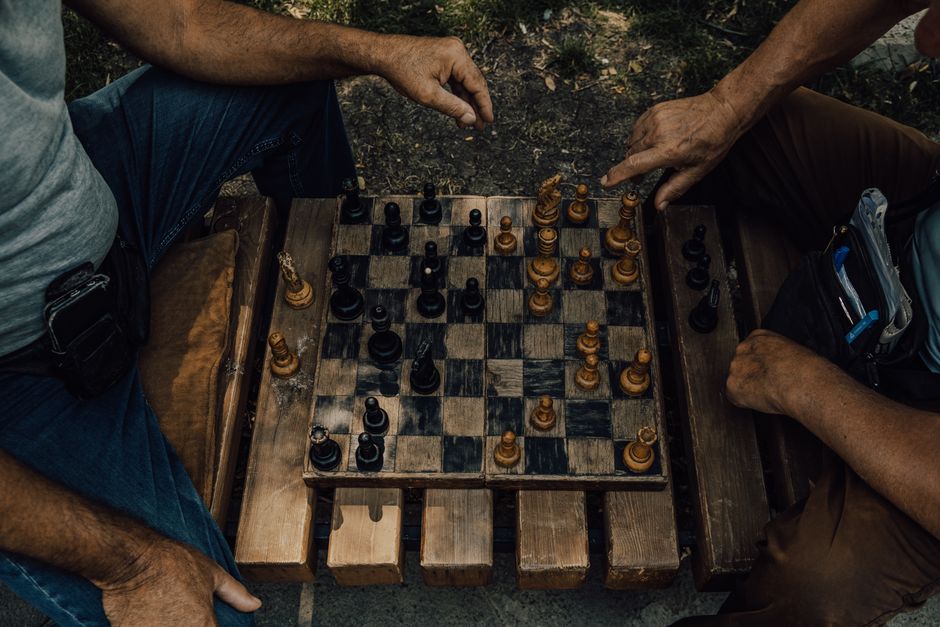
Karpov’s chess was built on control. He placed his pieces on their best squares, restricted the enemy’s activity, and improved his position by tiny increments until his advantage became overwhelming.
His central skill was recognizing which small advantage to accumulate and then converting it with flawless technique. He would happily accept a symmetrical or quiet position, confident that his superior understanding would tell over many moves.
This style could look uneventful to a casual viewer, but strong players recognized its depth. Every move served a purpose, and every one of the opponent’s plans was quietly snuffed out before it began.
Karpov had an exceptional sense of danger. He seemed to detect his opponent’s intentions several moves early and to defuse them before they became threats, a skill known as prophylaxis that he raised to an art form. Rivals often felt they were playing against a wall.
His piece placement was equally refined. He had a gift for finding the ideal square for each piece and for maneuvering patiently until his forces reached maximum harmony, at which point the accumulated small advantages became decisive.
Reaching the Summit

Karpov became world champion in 1975 in unusual circumstances, when Bobby Fischer declined to defend the title and forfeited it. Rather than let doubts linger, Karpov spent the next decade proving he deserved the crown through relentless tournament results.
His path to greatness featured:
- Winning the title in 1975 after Fischer’s forfeit.
- Dominating world tournament chess through the late 1970s and early 1980s.
- Defending the crown against Viktor Korchnoi in two hard matches.
- Facing Garry Kasparov in a legendary series of title matches.
His tournament record during his peak years is one of the strongest ever compiled. Karpov won event after event, silencing any suggestion that he was merely a paper champion who had inherited the title.
That dominance is sometimes overshadowed by his later matches with Kasparov, but it was historic in its own right. For nearly a decade Karpov was the man to beat in virtually every event he entered, and few players in history have strung together such sustained tournament success.
Karpov often said he preferred to win without taking risks, improving his position move by move until the opponent simply had no good options.
That philosophy defined him. He treated risk as a last resort rather than a first instinct, and his consistency across years of elite play proved how effective the method could be.
Karpov Versus the Attackers
Karpov’s quiet style contrasts sharply with the great attacking champions. Comparing them clarifies what made his chess distinctive.
| Champion | Primary style | Typical weapon |
|---|---|---|
| Karpov | Positional | Restriction, prophylaxis |
| Tal | Attacking | Sacrifices |
| Kasparov | Dynamic | Initiative |
| Capablanca | Technical | Endgame precision |
The table shows Karpov’s place among the greats. His nearest kin is Capablanca, another master of clarity, though Karpov’s specialty was suffocating the opponent’s play rather than converting endgames alone.
The Anti-Fischer Champion
Karpov’s rise is inseparable from Bobby Fischer’s departure. When Fischer forfeited the title in 1975, Karpov inherited a crown many felt he had not truly earned, and he spent years answering those doubts.
He did so in the most convincing way possible, by dominating the tournament circuit. Karpov entered event after event and won, compiling a record that few champions in any era could match and silencing the critics who had questioned his legitimacy.
His response to inheriting the title turned a potential weakness into a defining strength. Rather than avoid competition, he sought it out, proving through results that he belonged among the greatest players in the world.
That period also revealed the resilience beneath his quiet exterior. Karpov thrived under the pressure of constant scrutiny, and his willingness to prove himself again and again established a work ethic that shaped his entire career.
A Lasting Model
Karpov’s rivalry with Kasparov produced 144 world championship games, and though he ultimately lost the title, he remained a top player for many more years. His body of work is a treasure for anyone studying strategy.
His enduring legacy is the demonstration that patience and control can be as devastating as any attack. Coaches use his games to teach positional understanding, piece placement, and the art of doing nothing flashy while everything goes your way.
Students often find Karpov harder to appreciate than a swashbuckler like Tal, because his brilliance hides in small, undramatic moves. Yet learning to see it transforms how a player understands the game.
Learning from Karpov changes how a player thinks about advantages. Rather than searching for a knockout blow, the student learns to ask which small edge is worth pursuing and how to nurse it toward a win. That patient mindset is one of the hardest and most valuable skills in chess.
His influence extends into the modern era, where positional understanding remains the foundation of elite play. Even in an age of powerful engines and sharp computer preparation, the ability to accumulate small advantages and restrict the opponent, the very skills Karpov perfected, still separates the best players from the rest.
Replay one of his slow positional wins and track the enemy pieces. You will watch them lose their squares one by one until they have nowhere to go. That silent suffocation — victory achieved without a single thrilling move — is the signature of one of the most efficient champions chess has ever produced.