
Fischer vs Spassky, played in Reykjavik in the summer of 1972, is the most famous chess match ever staged. Bobby Fischer defeated defending champion Boris Spassky to become the first American world champion, ending a quarter-century of Soviet control over the title.
The match mattered far beyond chess. Set against the Cold War, it turned a board game into front-page news and made Fischer a household name across the world.
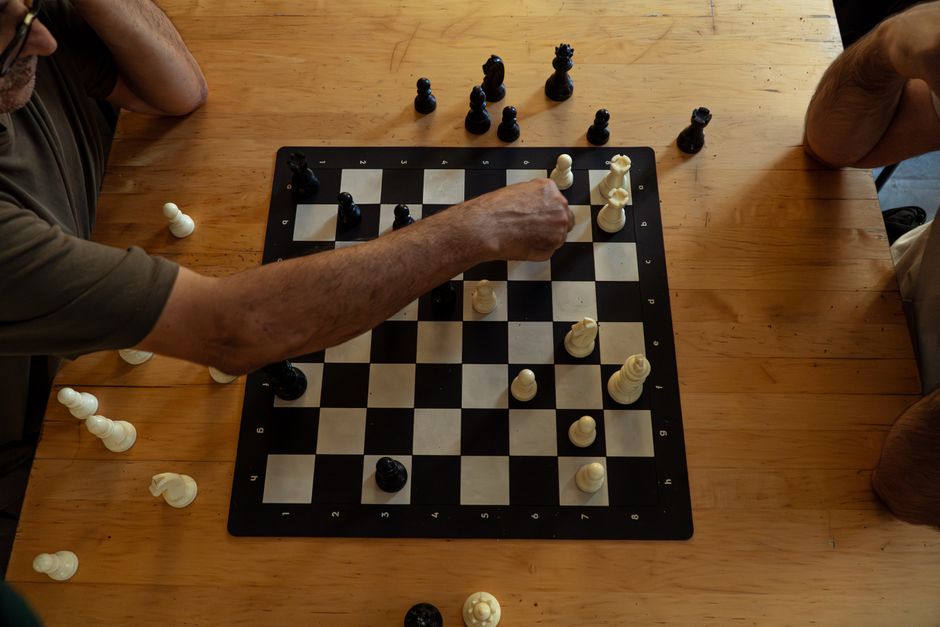
A Rocky Start
The match nearly collapsed before it began. Fischer made a long list of demands about money, cameras, and conditions, and he did not arrive in Iceland on schedule. Only after intervention and a doubled prize fund did he agree to play.
Fischer lost the first game after an uncharacteristic blunder, then forfeited the second game by refusing to appear over a dispute about filming. Trailing 0–2, he faced a crisis that would have ended most challenges before they started.
Then he agreed to play game three in a small back room away from the cameras. He won it, and the momentum of the match shifted permanently in his favor.
The back-room game is one of the strangest episodes in championship history. Spassky, well within his rights to refuse the unusual venue, agreed to play there as a sporting gesture. Many later argued that this concession handed Fischer the psychological foothold he needed.
From that point the American’s confidence surged. The player who had seemed ready to abandon the match transformed into the relentless competitor who had demolished the world’s best in the qualifying rounds.
The Turning Point

From game three onward, Fischer played with the focus and force that had carried him through the Candidates matches, where he had crushed elite grandmasters by lopsided scores. Spassky, a versatile and sporting champion, could not stem the tide.
The match unfolded in clear phases:
- Games 1–2 — Fischer fell behind through a loss and a forfeit.
- Game 3 — his first win turned the psychological tide.
- The middle games — Fischer built a commanding lead with varied, aggressive play.
- The finish — he secured the title with games to spare.
Fischer won the match by a decisive margin. His willingness to vary his openings, long a criticism of his narrow repertoire, surprised Spassky and denied the Soviet team its usual preparation advantage.
Spassky famously applauded one of Fischer’s finest moves during the match, a rare gesture of sportsmanship between rivals from opposing superpowers.
That moment of respect became one of the enduring images of the event. It reminded the watching world that beneath the political theater sat two supreme artists admiring each other’s work.
Why the Match Endured
The 1972 match reshaped chess. It triggered a boom in American interest, sold countless sets and books, and inspired a generation of players.
| Feature | Fischer | Spassky |
|---|---|---|
| Role in 1972 | Challenger | Defending champion |
| Nationality | United States | Soviet Union |
| Style | Precise, aggressive | Universal, flexible |
| Match result | Won the title | Lost the title |
The table frames the contrast that gripped the public. An individualist American challenging the vast Soviet chess machine was a story that transcended the sixty-four squares.
Newspapers that had never covered chess put the match on their front pages. Ordinary people who could not name a single opening followed the results, and chess sets sold out in shops across the United States. The match created millions of new fans almost overnight.
Iceland, the neutral host country, embraced its moment in the spotlight. Reykjavik became synonymous with the event, and the city’s association with the match endures to this day, a small nation forever linked to one of chess’s defining moments.
The Chess Behind the Drama

Lost in the political noise is the fact that the match produced excellent chess. Fischer’s play showed the precision and depth that had made him the strongest challenger in a generation, and Spassky fought hard throughout.
Fischer surprised observers by broadening his opening choices. Long known for a narrow, deeply prepared repertoire, he ventured into new territory during the match, denying Spassky’s Soviet support team the chance to prepare against familiar lines.
That flexibility, more than any single game, may have been the decisive factor in the match. By becoming unpredictable, Fischer neutralized the greatest advantage the Soviet chess machine possessed, which was its unrivaled capacity for preparation.
Several of the games from Reykjavik entered the standard chess literature. They are studied not as historical curiosities but as high-quality examples of top-level play under extraordinary pressure, a reminder that the match earned its fame on the board as well as off it.
The Legacy of Reykjavik
Fischer’s triumph was the high point of his career and, tragically, nearly its end. He never defended the title in a match, forfeiting it in 1975 when negotiations with the federation broke down.
Even so, the 1972 match cemented Fischer as a symbol of individual genius overcoming a dominant system, and it remains the moment chess entered mainstream culture. Documentaries, books, and films have retold it for decades.
For Spassky, the loss did not erase a distinguished career; he remained a respected grandmaster and gentleman of the game. His graciousness in defeat is remembered almost as warmly as Fischer’s brilliance in victory.
The match’s ripples are still visible today. The surge of interest it created helped build the professional infrastructure of modern chess, and the story continues to be retold to new audiences who discover the game long after the players themselves have passed from the scene.
Study the games from Reykjavik and you will see world-class chess played under enormous pressure. But the match’s true importance lies in what it represented — a single, driven challenger proving that talent and will could topple the strongest chess establishment the world had ever built.
The two men remained linked for the rest of their lives, their names spoken together as a defining pair. When they met again in 1992 for an unofficial rematch, the world watched once more, drawn back to the story that had captivated it two decades earlier. That enduring fascination is the surest sign of how deeply the 1972 match reshaped the way the public sees the game.