
Paul Morphy’s Opera Game is the most famous instructional game ever played: on a single night in 1858, he defeated Duke Karl of Brunswick and Count Isouard in only 17 moves. It matters because every principle a beginner must learn — rapid development, control of the center, opening lines against a stuck king — appears in one short, brilliant sequence.
Morphy played it in a box at the Théâtre-Italien in Paris while an opera was performing. His two opponents consulted together as a team, and Morphy still dismantled them effortlessly. The game has been taught in classrooms and chess clubs for over a century.
The setting adds to the legend. Morphy, a guest of the duke, was reportedly more interested in the performance on stage than in the amateurs across the board. He played quickly and casually, treating a game against two titled aristocrats as light entertainment between arias.
That nonchalance only sharpens the contrast with the quality of his moves. There is no evidence Morphy strained over the position; the win flowed from habits so ingrained that he could produce a masterpiece while half-watching an opera. For students, that detail carries its own lesson about how deeply principles must be absorbed.
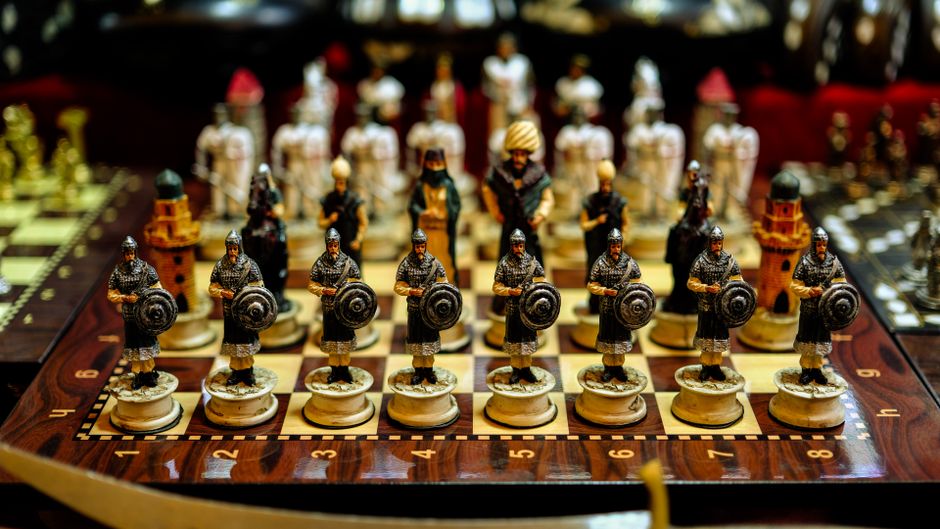
What Happened at the Board
The game opened with the Philidor Defense after 1.e4 e5 2.Nf3 d6 3.d4. The allies chose a passive setup, and Morphy immediately punished the slow play. He developed every piece with a threat, refusing to grab material when faster development was available.
Morphy’s guiding idea was that a move which develops a piece and creates a threat is worth more than a move that merely wins a pawn. By move 10 he had castled and brought out his bishops and knights, while Black’s queenside pieces sat untouched on their starting squares.
The finish is legendary. Morphy sacrificed a knight, then his rook, then delivered mate with his last two minor pieces and the queen against a king that had never found safety. The final position is a picture of coordination: every white piece contributed, every black piece watched.
Why the Game Still Teaches
The Opera Game endures because it demonstrates abstract ideas through a concrete, memorable story. Coaches use it to show that material is secondary to activity when the enemy king is exposed.
Here are the core lessons students take from it:
- Develop quickly — get knights and bishops off the back rank before pushing pawns.
- Castle early to tuck the king away and connect the rooks.
- Do not chase pawns while pieces are undeveloped.
- Open lines toward a king that cannot escape.
- Sacrifice for a forced mate, not for vague hopes.
If you memorize only one historical game as a beginner, make it this one — it packs a full opening manual into seventeen moves.
The clarity is what makes it special. Many brilliancies require deep calculation to appreciate, but the Opera Game’s logic is visible to a player who has known the rules for a week.
Each move also builds naturally on the last, which makes the game easy to remember. There are no obscure quiet moves or long strategic maneuvers to memorize — just a steady stream of developing moves and threats leading to a forced finish. That narrative quality is why it sticks in the mind long after a student first sees it.
Instructors often ask beginners to explain why each of Morphy’s moves is good before revealing the answer. Because the reasons are transparent, students succeed, and the exercise builds confidence in the very principles the game illustrates. Few historical games work so well as a teaching conversation.
Morphy in Context

Morphy was an American prodigy from New Orleans, widely regarded as the strongest player in the world during his brief active period from roughly 1857 to 1859. He toured Europe, beating the leading masters of the day, then abruptly retired from serious competition.
His style anticipated modern chess by decades. While many of his contemporaries attacked recklessly, Morphy attacked only after building a sound position — a philosophy that later players such as Wilhelm Steinitz would formalize into positional theory.
| Aspect | Opera Game (1858) | Typical romantic-era game |
|---|---|---|
| Development speed | Every piece with tempo | Often one-sided attacks |
| Material attitude | Sacrificed freely for mate | Grabbed pawns early |
| King safety | Castled early | Frequently neglected |
| Legacy | Standard teaching tool | Mostly forgotten |
The table highlights why Morphy stood apart. His attacks looked romantic, yet they rested on principles the romantic era usually ignored.
His opponents in the Opera Game were competent amateurs, not masters, which some critics note when weighing the game’s significance. Yet the point of the game was never the strength of the opposition. It was the flawless demonstration of ideas, produced against real resistance from two heads working together, in a single unbroken sequence.
The Enduring Legacy
Grandmasters from Bobby Fischer to Garry Kasparov have praised Morphy’s understanding. Fischer once ranked him among the greatest players of all time, arguing that Morphy would compete with modern masters if given time to study current openings.
The Opera Game is a fitting monument. It captures a young genius doing something effortless-looking against real opposition, in a setting no professional match would ever allow. The combination of a glamorous venue, a hopeless pair of opponents, and flawless technique gave the game a story that outlived its era.
The game has also survived because it is short enough to teach in a single sitting yet rich enough to reward repeated study. A coach can walk a class through all seventeen moves in one lesson, then return to the same game months later to draw out deeper points about tempo and initiative.
Study it move by move and replay the final mating net. You will absorb more about piece coordination in fifteen minutes than many players learn in months. That is the quiet power of Morphy’s most famous night — a game played almost as an afterthought that became the first lesson millions of players ever memorized, and still the clearest illustration of why time and activity, not material, decide open positions.